
Jujutsu: Malevolent Shrine
M16 RewardsRole Playing
3.941.00 Reviews
- Version
- 1.0.1
- Installs
- 100.00K
- Age Rating
- Everyone
Screenshots
Our Review of Jujutsu: Malevolent Shrine
 Analysis by Appyee
I approached Jujutsu: Malevolent Shrine expecting a compact role-playing game built around supernatural combat, and that is exactly the kind of experience it presents: tactical five-versus-five battles where team choices matter more than simply tapping through attacks. Its central appeal is the feeling of managing cursed power under pressure, deciding when to commit to a move and when to preserve options for the next exchange.
The game comes from M16 Rewards and is free to download, with optional purchases ranging from $0.99 to $99.99 per item. It is rated for Everyone, runs on Android 8.0 or later, and the current version is 1.0.1. Those details make it fairly approachable from a device-compatibility standpoint, although the purchase range is worth remembering before handing the game to a younger player.
After spending time with it, I see the strongest audience as players who enjoy short, deliberate encounters rather than completely hands-off progression. The store summary points toward reality-breaking occult battles, but the more useful way to understand the game is this: it asks you to build a workable five-character plan, read the opposing formation, and avoid wasting your best opportunity too early.
How the basic battle rhythm feels
The baseline workflow is easy to understand. I enter a battle, inspect the opposing side, choose actions for my team, and watch the turn develop. The five-versus-five format gives every decision more weight than a simple one-on-one duel. A weak opening choice can leave one character exposed, while a well-timed action can change which side controls the next exchange.
That structure is also what gives the game its role-playing identity. I am not only looking for the strongest individual move. I am thinking about which character should act first, which target deserves attention, and whether a powerful option is better used immediately or saved for a more decisive moment. The best sessions feel like small tactical puzzles rather than a race to press the most dramatic button.
For a new player, I recommend beginning with a repeatable routine instead of changing everything after every loss. First, look at the opposing lineup. Then identify the enemy that appears most likely to disrupt your plan. After that, decide whether your opening should focus on damage, protection, or creating a safer position for the next turn. This simple order makes defeats easier to understand because you can tell whether the problem was target selection, timing, or team balance.
One everyday scenario where this works well is a short break during a commute or lunch. I can play a battle without needing to learn a complicated control scheme, but I still have enough decisions to stay engaged. If I only have a few minutes, I prefer making one clear plan and testing it rather than repeatedly rebuilding my team. That habit reduces the feeling of random trial and error.
The game is less suitable for someone who wants a purely passive experience. Even when the presentation feels accessible, the five-character structure encourages attention. Players who prefer a simple action game with constant movement may find the tactical pacing slower than expected. Likewise, anyone looking for a deep, long-form role-playing adventure with extensive exploration should approach this as a battle-focused game instead.
Settings and preparation that save time
Before settling into regular play, I would check the available settings and make the presentation comfortable for longer sessions. In a game based on repeated encounters, small annoyances become noticeable quickly. I look for options that affect sound, notifications, text readability, and battle presentation, then keep only the effects that help me understand what is happening.
Sound deserves special attention because dramatic effects can make attacks feel more satisfying, but they can also become distracting when I am repeating similar battles. I usually keep enough audio to distinguish important moments and lower it when playing in public. That is a practical adjustment rather than a gameplay advantage, but it makes the game easier to fit into a normal day.
I also recommend checking purchase protections before allowing a child to play. The Everyone rating makes the game broadly accessible, yet the optional item range reaches from a small impulse purchase to a much larger one. I would treat the free entry point as the starting experience, not as a promise that every future convenience or progression option will cost nothing.
Another useful preparation step is deciding what success means for the session. If I am testing a new formation, I do not judge it only by whether it wins immediately. I watch whether the opening sequence is more stable, whether one character is repeatedly left without support, and whether my strongest option is available when the battle becomes difficult. This creates a better feedback loop than chasing a single victory.
The current version is 1.0.1, so I would keep the app updated through the normal platform process. Updates can matter for stability and compatibility, especially on older devices. The minimum requirement of Android 8.0 keeps the technical barrier fairly modest, but actual comfort will still depend on the phone or tablet, available storage, and how smoothly the device handles the battle presentation.
Repeatable patterns for quicker decisions
Experienced play in this kind of five-versus-five system comes from reducing unnecessary decisions. I do not want to reconsider the entire team after every ordinary encounter. Instead, I use a few repeatable patterns and change only the part that clearly failed. If the team survives but cannot finish targets, I adjust the damage plan. If it deals damage but collapses early, I reconsider protection and timing.
A useful pattern is to separate the battle into three questions: who threatens my plan, what can I safely spend now, and what must remain available for the next exchange? This prevents me from treating every action as equally urgent. A flashy move may look attractive, but using it against a low-priority target can leave the team without an answer when the real threat acts.
I also prefer testing one change at a time. Replacing several characters or altering the entire approach after one defeat makes it impossible to know what helped. By keeping most of the formation stable, I can compare the result of a different opening or target choice. This is a small habit, but it turns the game from guessing into observation.
When a battle goes badly, I replay the sequence mentally rather than blaming the result on power alone. Did I allow an opponent to act freely? Did I spend a key option before the enemy revealed its danger? Did I focus on visible damage while ignoring the character that was shaping the fight? These questions are more useful than simply repeating the same actions faster.
For routine encounters, I favor consistency over experimentation. I reserve unusual team combinations for moments when the standard plan stops working. That keeps progress less tiring and gives experimentation a clear purpose. It also helps players who have limited time, because they can maintain a dependable approach without turning every session into a full strategy workshop.
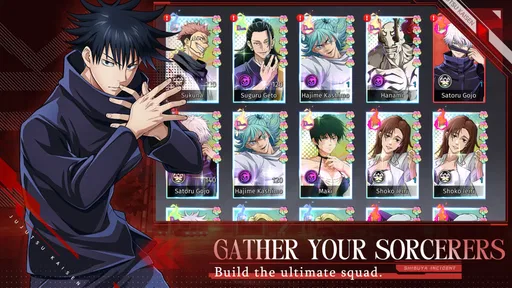
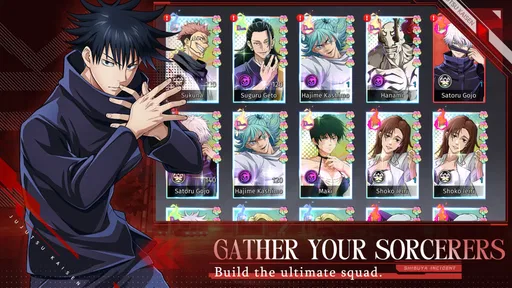
The game’s role-playing category may attract people who enjoy character-focused progression, but I would not assume that collecting or upgrading alone will carry the experience. The tactical value comes from how the characters work together in the five-slot structure. A roster choice that looks impressive individually may be less useful if it creates a fragile or poorly timed team.
Where the tactical depth reaches its limits
My main reservation is that the compact battle format can become repetitive if I stop making meaningful adjustments. Five-versus-five encounters provide room for planning, but they do not automatically create endless variety. The experience depends on whether the available battles continue to challenge my habits rather than merely asking me to repeat the same successful sequence.
That is why I would not recommend spending immediately just to remove every obstacle. Optional purchases can be tempting when a battle exposes a weakness, but a purchase does not replace learning why the formation failed. I would first test a different target order, conserve stronger actions, or revise the team’s balance. Only after understanding the problem would I decide whether spending adds genuine convenience.
The purchase range also changes how I evaluate the free model. The game is easy to try because the entry price is free, but players who are sensitive to in-app pressure should set a personal limit before beginning. I find that a clear rule is better than making decisions in the middle of a frustrating loss. This is especially important when the game’s supernatural presentation makes every setback feel dramatic.
Another limitation is audience fit. Players who want a richly exploratory role-playing game may find the battle focus narrow. Those who prefer fast reflex challenges may also miss direct action. In my view, the game works best between those extremes: it is more thoughtful than a simple tap-through title, but it should not be mistaken for a large adventure with unlimited systems to master.
There is also a practical difference between playing casually and trying to optimize. Casual players can enjoy choosing a team and learning through ordinary mistakes. More demanding players will naturally begin tracking opening patterns, target priorities, and the timing of stronger actions. The latter approach is rewarding, but it requires patience. If I am not willing to repeat a battle to test one adjustment, I get less value from the tactical layer.
Compared with more conventional role-playing alternatives, this game’s distinctive point is the concentrated five-versus-five decision space. A traditional adventure may offer exploration, dialogue, equipment management, and a broader sense of journey. A faster action title may provide more immediate control. Jujutsu: Malevolent Shrine is a better choice when I want the team battle itself to be the main event and prefer planning over constant movement.
Who should try it and who should skip it
I would recommend it to players who like supernatural themes, compact tactical encounters, and the satisfaction of improving through small changes. It is particularly suitable for someone who enjoys asking why a battle was lost and then testing a cleaner plan. The free price makes it straightforward to sample, while the Everyone rating keeps the stated age audience broad.
I would be more cautious about recommending it to players who dislike optional purchases in free games. Even if someone never buys anything, the presence of items priced from $0.99 to $99.99 per item can affect how comfortable the experience feels. I would also point younger players toward supervised use, not because the age rating is restrictive, but because purchase decisions are easier to manage with an adult involved.
The game has attracted over 100 thousand installs, and its average rating is 3.9 from around 500 ratings, with dozens of written reviews. I read that reception as a sign of a game with a real audience but a fairly mixed response. That matches my own view: the core idea is appealing, yet enjoyment depends heavily on whether the player wants repeated tactical battles rather than a broader role-playing package.
For someone deciding whether to keep it installed, I suggest a simple test. Play enough encounters to establish one dependable formation, then change one part of the plan and see whether the result feels meaningfully different. If that process is satisfying, the game has probably found its audience. If it feels like routine repetition, another role-playing option with exploration or more direct combat may be a better fit.
My verdict after building a steady habit
What I like most is the discipline the five-versus-five structure encourages. I cannot rely on one favorite action forever. I have to consider the whole formation, protect the timing of important choices, and accept that a strong move used at the wrong moment is still a mistake. That gives the battles a useful sense of consequence without requiring a complicated control layout.
My advice is to play with a notebook-like mindset, even if that only means remembering one lesson from each defeat. Keep a reliable opening, identify the enemy that interferes with it, and change one variable at a time. Check the settings early, decide how you will handle purchases, and avoid confusing a difficult encounter with proof that your entire team is wrong.
The best reason to try Jujutsu: Malevolent Shrine is its focused tactical loop, not the promise of endless content. It gives me a manageable way to enjoy occult-themed team battles during short sessions, while still rewarding careful planning. Its limits become clear when I want exploration, constant action, or a completely passive progression path.
Overall, I think M16 Rewards has made a worthwhile free role-playing game for players who enjoy measured five-versus-five decisions. I would recommend giving it a fair trial, especially if supernatural strategy appeals to you, but I would approach the in-app purchases deliberately and keep expectations centered on tactical battles. For me, that honest framing is what makes the game easier to enjoy: it is a focused team-combat experience, and it works best when I treat every encounter as a small problem to solve.
Verdict
Strengths of Jujutsu: Malevolent Shrine
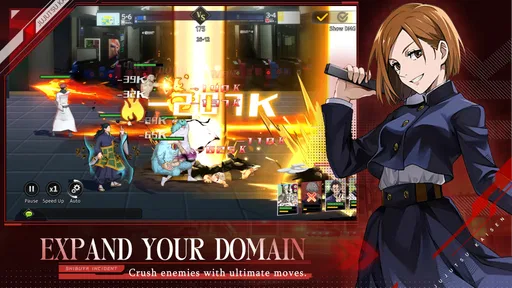
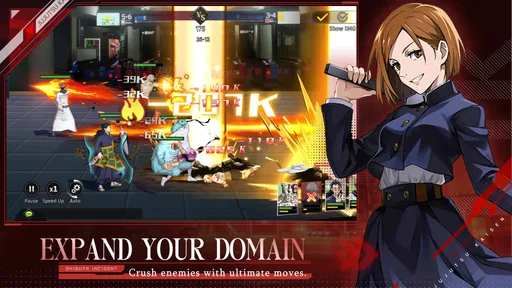
- Fast-paced combat feels satisfying and keeps matches engaging.
- Simple controls make it easy for new players to start fighting.
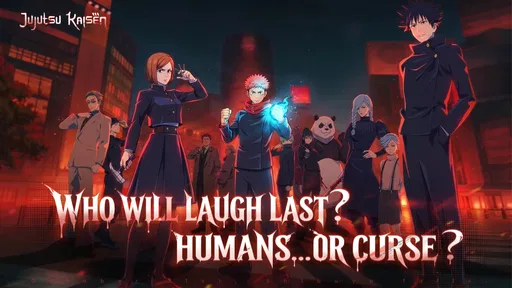
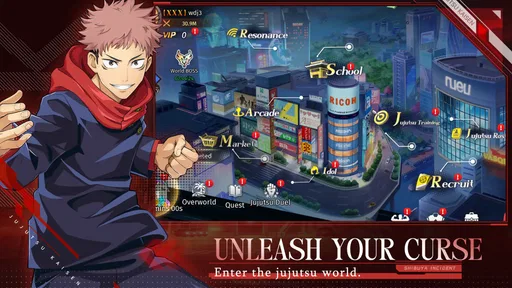
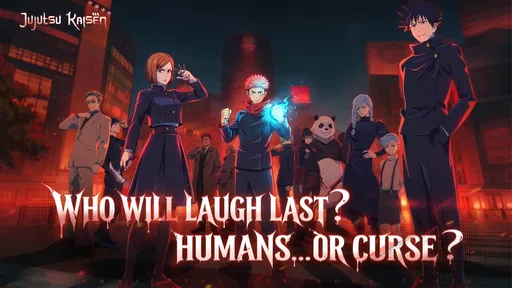
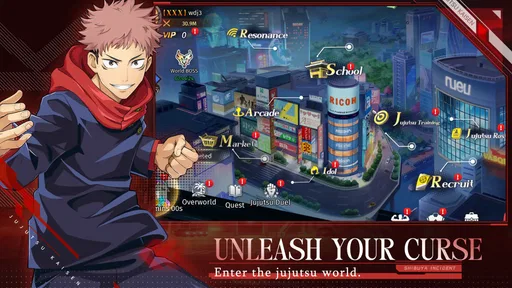
- Anime-inspired visuals capture the atmosphere of Jujutsu Kaisen well.
- Short battles are convenient for quick gaming sessions.
- Different abilities encourage players to experiment with strategies.
Limitations of Jujutsu: Malevolent Shrine
- Progression may feel repetitive after extended play sessions.
- Some abilities can seem unbalanced during certain battles.
- Performance may vary on older or less powerful devices.
- Limited content can reduce long-term replay value.
- Frequent effects and animations may make combat hard to follow.
Similar Picks in This Category
View All
Hair Dye
CrazyLabs LTD4.4

Monster High™ Beauty Salon
CrazyLabs LTD4.5

Bus Simulator - Bus Games 3D
Jima Apps4.4

Flight Pilot: 3D Simulator
Wildlife Studios4.1


Super Stylist Fashion Makeover
CrazyLabs LTD4.4
Frequently Asked Questions
What is Jujutsu: Malevolent Shrine?
Jujutsu: Malevolent Shrine is a mobile game inspired by the supernatural battle-anime style of cursed spirits, sorcerers, and high-impact techniques. It generally focuses on assembling a team of powerful characters, improving their abilities, and fighting through missions or competitive encounters. Before downloading, remember that the exact content, gameplay systems, and available characters may vary depending on the version, region, and developer.
Is Jujutsu: Malevolent Shrine an official Jujutsu Kaisen game?
You should check the publisher information on the Google Play Store or App Store before installing. The title and visual style may suggest a connection with Jujutsu Kaisen, but not every similarly named mobile game is officially licensed. Confirm the developer, copyright notices, store description, and user reviews so you understand whether it is an official product, a fan-made project, or an unrelated game using familiar anime-inspired themes.
Can I play Jujutsu: Malevolent Shrine offline?
The game may require an internet connection for downloading resources, account verification, advertisements, cloud saves, events, or server-based battles. Even if some stages appear playable offline, full functionality may depend on an active connection. I recommend checking the store listing and testing the game after installation before traveling or relying on it without Wi-Fi, especially because online services can change with updates or server maintenance.
Does Jujutsu: Malevolent Shrine include in-app purchases or advertisements?
Anime-style mobile games commonly use optional purchases for premium currency, character summons, upgrades, energy, cosmetic items, or limited-time rewards. Advertisements may also appear between stages or in exchange for bonuses. Review the app-store payment information before downloading and use parental controls if necessary. Free installation does not always mean that every character, resource, or progression feature can be accessed without spending money.
What devices are compatible with Jujutsu: Malevolent Shrine?
Compatibility depends on the specific release and the developer’s current requirements. Check the app page for the minimum Android version, iOS version, storage space, and supported device models before downloading. Because games with animated effects can use considerable memory and processing power, older phones may experience longer loading times, reduced frame rates, overheating, or crashes even when the application technically installs successfully.
Play our best games!


